Sunday, August 20, 2006

HTPC Diary Part 3: Motherboard and CPU

I ordered and built my HTPC this week, so now have some practical knowledge to buttress the theoretical. I'm not going to reveal all of my selections just yet though. A lot of thought went into each component, and I want to share my considerations at each step of the way.

The choice of motherboard and CPU was probably the most belabored of all of my decisions. I spent a truly ridiculous amount of time weighing all of the options, creating and comparing different configurations in my Newegg.com wishlist. It didn't help that we're in a transitional moment for processors right now, so at stake in my decision was not only how much processing power I could get for my budget, but also whether the platform I built would be supported in the future, and what amount of upgrade potential I was willing to pay for up front.

A Tale of Three Platforms

It's all Intel's fault. They recently released their Core 2 Duo (Conroe) processor, which by all reports, blows all other desktop CPUs out of the water. While the geek inside me started salivating, I never planned to buy a high-end CPU for my system. My budget just wouldn't allow it. But building a system that supports the current microprocessing champ would guarantee a decent level of upgradability in the future. So the choice seemed simple at first: pair an Intel motherboard with an Intel budget CPU like the Celeron, or even a low-end Pentium 4.

As I did more research, however, I realized it would not be so easy. Even though the Core 2 Duo uses the same type of motherboard as their last generation of CPUs--that is, the same CPU socket (LGA 775 or "Socket T")--most of the existing motherboards do not really support the new chip. The sockets may be the same, but the Core 2 Duo requires new chipsets and configurations. Turns out, to get a Conroe-compatible motherboard would cost a pretty penny.

Another requirement I had for my motherboard was that it be in the Micro-ATX form factor. This would allow me to build a more space-efficient system. Also, M-ATX motherboards typically have built-in graphics engines. As I don't plan on using this rig for gaming, integrated graphics is fine, in fact preferred, as long as the mobo provides TV outputs. But with the pathetic trickle of Core 2 Duo motherboards to the market, my search for an affordable Conroe-compatible mobo for HTPC seemed doomed. In fact, by the time I made my order, the least expensive such M-ATX motherboard that I could actually find, the Intel BOXD946GZISSL, was $90. And with no TV-out I'd have to buy a separate graphics card, a minimum $30.

Feeling burned by waiting for the next-gen platform, I thought, "to hell with upgrading, I'll just buy the cheapest motherboard and CPU that fits my needs." This sent me looking at the AMD Socket 939 platform. Even though Intel's new processor schooled AMD's high-end offerings, AMD's budget processor, the Sempron, is still a better value than Intel's Celeron, and more energy-efficient to boot. And with AMD moving on to a new platform, the Socket AM2, for their next-gen chips, the market is saturated with Socket 939 motherboards and processors. There's a lot of variety in this mature product line, with good values to be found from vendors. In fact, for about the same price as the Intel motherboard and graphics card, I could afford a tricked-out 939 AMD motherboard and a CPU from the mid-range Athlon 64 line of processors. I went to bed one night sure that I had resolved the issue.

When I woke up the next morning, I had nagging doubts. The 939 platform is so cheap because everyone knows AMD isn't going to support it in the near future. What if I get an HDTV and need a more powerful system to handle the HD signal, but find I can't upgrade? And the next-gen platforms of both Intel and AMD use 240-pin DDR2 memory while 939 motherboards use 184-pin DDR RAM. So, if I did upgrade my motherboard in the future, I wouldn't be able to use the memory I buy today. I became convinced I needed to invest in one of the next-gen platforms, even if it came at a premium.

Intel's platform is still too rare and expensive. But AMD's new platform, based on the Socket AM2, has been on the market for a few more months, and it shows in the variety of motherboards available. And sure, Intel is the new speed leader, but AMD will counter soon enough. And even if they never beat the benchmarks of the Core 2 Duo on the AM2 platform, as long as they're competitive, I'll be happy.

The IGP Wars

Realizing that Integrated Graphics, the kind included on lowly business PCs everywhere, outsell high-end video cards on volume alone, computer graphics hardware manufacturers Nvidia and ATI have each moved into that space recently, and not a moment too soon. With more people making HTPCs, and the stiff requirements of Windows Vista, better performing Integrated Graphics Processors (IGPs) are going to be ever more important. And Intel has not been particularly receptive to the needs of HTPC hobbyists with their IGP solutions.

So I resolved early on to go with a motherboard containing either ATI's Radeon XPress 200 or Nvidia's GeForce 6150 GPUs. Both chipsets provide hardware MPEG decoding (to compliment your TV tuner's MPEG encoding), some level of HD acceleration, DirectX 9 support, and the option of TV-output (though not all motherboards exploit this). In the end, the choice was more-or-less made for me. After narrowing down the options to AMD Socket AM2, Micro-ATX, and TV-Out, I had exactly two choices (at least from my preferred vendor):

MSI K9NGM2-FID
ASUS M2NPV-VM

Seems a lot of people are coming to the same conclusion, as various system builder forums are host to comparisons between these two motherboards. I spent a few extra bucks for the Asus, for the simple fact that MSI requires you to buy their TV-Out header separately, so it's a wash on cost and a plus to Asus for convenience.


Crawling Back to Sempron

With the extra cost of the AM2 motherboard, and the premium AMD charges for the CPUs that fit it, my dreams of affording an Athlon 64 CPU were dashed. I opted for the not-quite-bottom-of-the-barrel AMD Sempron 64 3000+, which at least has twice the L2 cache of the 2800+.
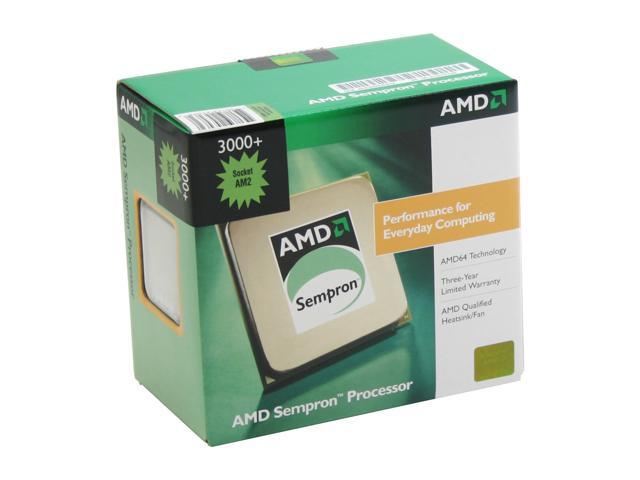


So, my choices represent a compromise between current performance, cost, and upgradability. The results aren't perfect, but they'll do. Wait a few more months and I could probably have found a reasonably-priced Core 2 Duo-compatible motherboard, perhaps even with ATI's next-generation IGP, the Radeon Xpress 1250, with full HD support. But that chip is already a few months overdue, and my shows are starting soon!

Next time: The Case

Saturday, July 15, 2006

HTPC Diary Part 2: Tunerama

What Makes an HTPC an HTPC?

Before I go into the results of my research into TV tuners, it might be helpful to break down exactly those qualities that differentiate an HTPC from any regular old PC. Of course, both share many features, such as hard drives, a motherboard, an operating system, etc. But there are a few things an HTPC must have above these:

TV Tuner - Until the media companies start beaming digital, pre-compressed feeds of television programs straight through the Internet, an HTPC needs something that will grab a TV signal off the air or cable box and convert it to a workable format. Some media companies are doing this already through iTunes or, in the case of some ABC shows, on their own website. But iTunes downloads aren't free, ABC's streaming feeds can't be archived, and these only represent a tiny fraction of all the shows available.

TV and Audio Out - The HTPC must also have the hardware allowing it to convert the digital signal back into analog for display on a conventional TV set. That is, unless one has an HDTV with DVI inputs, or plans to use a monitor instead of a TV. I'm still kickin' it low-tech with my 27 inch cathode ray. So I'll need something with S-Video or Component outputs (I may not have the fanciest TV, but even I would never use composite video). And even the lowliest of motherboards now has, at the very least, stereo audio output.

Media Center Software - To schedule recordings, play back video and sound, and do a host of other media central things. Lots of options here, which I'll get into later.

Remote Control - Unless you want to whip out the keyboard every time you need to change the channel.

Smaller case and quieter components - Actually optional, but do you really want a noisy monstrosity ruining the mise-en-scene of your harmonious living room?

That's about it. Of course, to get everything to work together reliably and optimally, one has to put a lot of consideration into the selection of all components. But these are the minimums.

One more consideration. Let's say you have a fairly modern PC in another room already. Do you have to build a whole new machine? You could just add a TV tuner and media center software and then buy a media bridge, such as the Sage TV Media Extender to stream content to your TV wirelessly. For this you would also need a cable hook-up in the same room as your PC, which is one reason why I won't be going this route.

Tuner Salad

Microsoft jumped into the HTPC fray in late 2004 with their Media Center Edition operating system, a version of Windows XP with integrated Tivo-like functionality. I probably won't be using this OS for my box, for reasons to be explained later, but the software has, and will continue to have, a strong impact on TV tuner manufacturers and HTPC builders. Microsoft has, in a sense, set a de-facto hardware standard for media PCs, one that should not be ignored lightly. Expect better third-party application compatibility for Windows MCE-supported hardware as the operating system gains widespread use, and as Microsoft incorporates many of its features into Windows Vista.

And not just because Microsoft is the 500-lb gorilla will I be following their hardware requirements. Many of them, including their specifications for TV tuners, just make sense. Under Windows MCE, a TV tuner must have hardware MPEG 2 encoding. Some tuners, like the ATI All-in-Wonder 9800 Pro that powers my current PC, merely have a TV receiver and offload the processor-intensive task of encoding that video to the CPU. By selecting a TV tuner with hardware encoding, you reduce the load on the rest of the system, which means you can use more modest (read less expensive) parts.

Three Typical Selections

On nearly every hardware news or HTPC building resource I visited, three options seemed to dominate discussions of TV tuners: the Hauppauge Win-TV PVR line (150, 250, and 500), the Nvidia DualTV MCE, and cards based on the ATI Theater 550 Pro chipset (such as ATI's own TV Wonder Elite).

The Nvidia DualTV is a well-reviewed two-tuner card, which means it can record two shows at once. This is a great feature. However, this card is also priced about twice as high as other single-tuner cards ($170 at the Nvidia store, the only place I can find it). To keep the price of my system low, I'm going for the single. I can always add more tuners later, as most DVR software supports the use of multiple tuners.

The Hauppauge 150 seems a popular choice among HTPC builders, but reviews warn its picture quality is not up to snuff in comparison with the ATI and Nvidia cards, which are ITF certified and have all sorts of digital comb filters and the like, none of which is particularly meaningful to me, but they do seem to result in better video according to side-by-side comparisons.

So that leaves the Hauppauge 250 and the ATI Theater 550 Pro. In reviews, the two cards are said to perform comparably, with the ATI chipset narrowly edging out the other on video quality. But the ATI tuner can be found in cards costing almost half as much as the Hauppauge, perhaps because ATI licenses its technology to multiple card manufacturers. Packages vary widely, with some brands providing a remote control and more premium bundled software.

If I were to buy a TV tuner card today, therefore, it would be one based on the ATI chipset. Specifically, the VisionTek VTK-THXP550P comes bundled with Snapstream's BeyondTV software for just $60 after rebate, or about $110 with an included MCE remote.

To ATI or Not To ATI

One trend among system builders I noticed just did not make any sense to me at first. Why are the Hauppauge cards so popular if their products are so inferior? It took me a while to figure it out: Linux compatibility. Apparently, ATI is not so proactive in their Linux support, and have yet to release a driver for the 550 chipset. Choosing ATI, then, means choosing not to install Linux as your operating system, and that means the high cost of purchasing a copy of Windows. This would break my budget. I don't have an extra $100 to spend on an OS.

Fortunately for me, due to my student status, I happen to have a license for Windows XP Pro sitting around (don't be too jealous, this minor perk comes after paying $30 grand in tuition). So I will indeed be using an ATI card. I'll be missing out on the most popular open-source media center application, MythTV, but should still have plenty of options (more on that later).

But if you don't have a free Windows license and still want to build the cheapest possible HTPC, the Hauppauge Win-TV PVR 250 seems the most economical choice. Or even consider the Nvidia--though an expensive card, the money you save by using Linux will offset the extra cost.

But Wait!

All of that being said, I probably won't purchase any of these cards. ATI is coming out with an update to their 550 Pro chipset: the 650 Pro. Though they haven't released the hardware to the public yet, many reviewers have received test copies. The result? The new chipset provides even better image quality. What's more, the tuner can receive regular analog plus ATSC broadcasts. ATSC is the over-the-air HDTV standard. With an antenna, and depending on proximity to the broadcast tower, one may be able to pull down free HDTV from the major networks. I know, I don't have a digital TV. But it's still cool. And, even downmixed to standard resolution, HDTV broadcasts should still be clearer than Boston Comcast's dodgy analog cable.

Tuner cards based on the 650 Pro should start coming out this month. Remember, I said my goal was to get this thing built by the end of summer. Stay tuned to see if a new card makes it into my machine.

Wednesday, July 12, 2006

HTPC Diary Part 1: Introduction and Justification

I've been spending inordinate amounts of time over the last several weeks researching components to build my own home theater PC (or HTPC, or Media Center PC, etc), so I thought I'd serialize my thoughts, processes, difficulties, and conclusions for anyone who might be interested, or who might be able to give me advice along the way. This will be the first in a series of posts as I select components to buy, put them together, and test the machine. Today I will address the most obvious question about this task: why?

DIY HTPC: Not Just a Really Expensive Tivo

My VCR had been on the fritz for several months before my wife and I moved from Oakland to Boston to attend grad school. It played tapes reliably, but recording was a crap shoot. About half the time it would shut itself off after recording was engaged. So when hard decisions had to be made about which items would earn valuable space in our packing crate, it didn't make the cut. And I couldn't bring myself to buy a new one for our new home. Buy a VCR? Why not churn our own butter? Hello, digital technology.

But some deep-seeded geekiness (or genetic cheapness) also prevented me from buying a Tivo. It's just a function-crippled Linux box with a TV tuner, I could make one of those! More pointedly, my student budget would not bear the monthly service charge.

Subsequently, during a busy year of graduate study, we missed all of our shows. I resolved to find a solution by the end of the summer. As God as my witness, I will never miss The O.C. again!

Tivos are now essentially free. Buy one at retail and you'll get a rebate covering most of the cost under the condition that you'll subscribe to the monthly Tivo service for one year. Depending on how you look at it, they're either subsidizing the cost of the hardware or the first year of the service. They've also introduced two- tuner decks which can record two shows at once, and are experimenting with direct delivery of content to Tivo boxes over the Internet. Still, I refuse to buy a Tivo.

Here's why. Unlike when VCRs first came out and the hardware manufacturers fought the media industry tooth and nail in the courts to protect the consumer's right to record and archive broadcast TV, Tivo has cozied up to the TV industry, presumably to avoid such costly litigation. Instead of fighting, they've simply sold their customers out. First, they buried the 30 second skip function to make it more difficult to zap commercials. More recently, they've allowed the networks to flag shows for restricted access. Some shows will self-destruct if you don't watch them soon enough, others can't be recorded at all. This is unconscionable.

Frankly, I also refuse to pay for the Tivo service on principle. What is it that they're charging you for? Let's look at the elements that go into it. First, there's the program guide, the list of shows and showtimes and other metadata. This information is important, sure. But another way to look at it: these are advertisements. TV networks aren't carefully guarding the secret of when their shows are airing. They want you to know! Second, there's the data about your viewing habits that Tivo uses to make recommendations for other shows. The key word in that last sentence: YOUR. This is data you provide, and valuable demographic data at that. Tivo should be paying you to access it.

Those are the only truly dynamic aspects of the service. Tivo synthesizes these streams together with some statistical intelligence and a graphical front-end to provide their characteristic new media experience. What's a better term for this "service"? Software. But software you pay $13 a month for.

Other Options

Given my stand against Tivo, I did consider some other options.

Comcast offers cable subscribers the ability to lease a DVR for about the same amount as the Tivo service charge. But since Tivos now subsidize the cost of hardware, why lease when you can buy? Also, you have to have digital cable to lease the box, and I don't.

You can find DVD Recorders/Hard Drive hybrids which allow broadcast recording without paying a service fee, many of which also pull schedule information off the air for very limited Tivo-like functionality. These seem a good step forward, but they are also quite pricey, starting at $300. I feel confident that, for about a hundred bucks more, I can build something far more versatile.

The Dream Machine

My goal is to create a low profile, lowish noise PC that can sit with my other home theater equipment but do a whole lot more: the fabled convergence box. It should be able to do all the stuff Tivo does (program guide, "season pass" recording, pause live TV, etc), in addition to these things:

play all of my digital media
network with my desktop PC to share files
browse the web
run bittorrents when necessary
serve as an emergency backup word processor when my wife and I both have papers due

and maybe even:
run limited games (ideally arcade and early console emulators)
pull down over-air HDTV signals

That's the project. I've seen a lot of HTPC tutorials, but most are pitched at a much higher budget than mine; people building high-end vanity equipment or otherwise high-powered PCs with DVR functionality. My aim is to get a minimal configuration working for around $400, but which will support plenty of future upgrades.

The components are interdependent, but I have to start somewhere, so next I'll be looking at the heart of any HTPC: the TV tuner card.

Thursday, June 15, 2006

HUZZAH! Kicking and F-ing Screaming Criterion DVD!


About time! A full-on special edition of one of my favorite movies ever, never before released on DVD and seemingly eclipsed by a wacky Will Ferrell movie of the same name that came out last year. Seems the critical mass over The Squid and the Whale and The Life Aquatic (which Noah Baumbach co-wrote with Wes Anderson) has finally had the effect I had hoped. This marks the official retirement of my VHS collection.

Amazon shows a release date of August 22.

Tuesday, June 13, 2006

Frightening Post-Apocalyptic Movie from Pixar

There's this new movie out from Pixar in which all the humans are gone, but their cars remain, and they talk. What happened to the people? Did the radiation kill them? Global warming seems a likely candidate with all the cars around. Or, having become intelligent, was there a Matrix-like war between humans and machines in which the cars, like those in an early Peter Weir film, ate the people. "Soylent gasoline is people! It's people!"

Am I the only one completely underwhelmed by the concept of Cars? I usually love Pixar movies, especially the last one, The Incredibles, but have no plans to see this new one. I'm going to reveal my PC liberalism here, but does America really need a movie to teach kids how to further fetishize the automobile? I know they're only playing to their base. Kids have a natural fascination for cars and already play with Hot Wheels and RC kits. So, in a way, it's just a natural extension of Toy Story, which taught kids that they should really care about the feelings of inanimate objects. But at least toys don't cause global f-ing warming!

How about a movie about talking subway trains or public buses? Or, better yet, bikes and skateboards. Enough with the cars.

Or am I over-reacting?

Tuesday, June 06, 2006

Spooky 3D Photos

Becky and I visited Lexington and Concord yesterday, and I used the occasion to experiment with some stereo photography. Here are some photos of "Authors Ridge" in Sleepy Hollow Cemetery, Concord (not to be confused with the more famous Sleepy Hollow Cemetery in New York, where Washington Irving is buried). The cemetery houses the family plots of Alcott, Thoreau, Emerson, and Hawthorne, and the graves of the famous American authors from those families.

These are cross-eye stereo 3D images. I created them simply by taking one picture, moving the camera slightly to the right, taking another, and then combining them in Photoshop. To get the effect, cross your eyes until the two images "overlap" and resolve. If you like this kind of stuff, check out the Stereophotography group on Flickr.


Friday, June 02, 2006

Freedom Ain't Free

Looks like Becky is going to make any description of our recent Massachusetts explorama redundant with her epic post on the subject, but I did want to add some quick reflections on historical tourism in our nation's crucible.

Living in Oakland, just a bridge crossing away from San Francisco, whenever we'd host first time Bay Area visitors we knew we'd be subjected to the baseline area tourism experience for at least one day. As any resident could tell you, this includes such attractions as Chinatown, maybe a Cable Car ride, Fisherman's Wharf, and the almost universally loathed Pier 39. I'm sure many residents resist the tourism loop completely, but we feared dissuading visitors from the experience would just be selfish of us. As lame and misrepresentative of the area as some of those tourist-trap sites could be, how could we send our visitors back home without that common frame of reference, some content for conversation with any past or future Bay Area tourist or resident?

There are just those things you have to see when you travel somewhere for the first time, even if they are utterly corporate. To avoid them would require an almost comical act of repression. Ghiradelli Square? La la la la la, I can't hear you! Luckily, the standard crappy Boston tourism experience is a lot more interesting than the Bay Area's, in my opinion, because Boston's is built around US history rather than pretty scenery and shopping. In fact, it's downright moving at parts.

At the center of the experience is the Freedom Trail, a walking route starting from Boston Common which hits dozens of sites somehow relevant to the colonial experience and the American Revolution. Other popular Massachusetts attractions we hit last week were Salem and Plimoth Plantation. These sites may be more historically meaningful, but, as I found out, they are no less commercial than those SF hot spots. Now, I'm not naive. I know that wherever there are a mass of people there will be entrepreneurs hoping to take advantage of them. I suppose I just wasn't prepared for the high cost of even entering certain national landmarks. Aside from a few public areas like the Common, various burial grounds, and any landmark now inhabited by a shopping mall (like Fanieul Hall), walking the Freedom Trail is potentially rather costly.

Official Freedom Tour guided walk: $12
Paul Revere House: $3
Old State House: $5
Old South Meeting House: $5
Old North Church ("one if by land, two if by sea"): donations encouraged, and you can't go up to the steeple.
Historic Cambridge self-guided walking tour map: $2.50
Trinity Church: $5 self-guided tour
Salem Witch Museum (in no way official): $6
Plimoth Plantation and Mayflower II (both private "recreations"): $24

They haven't figured out a way to charge for the Holocaust Memorial. Yet.

I don't know, I understand the cost involved with maintaining all of these attractions, and that some of them are privately owned. The Old North Church is still a working church, so why sacrifice the living history for the mythology? But there's something pretty irksome about touring American heritage sites and being confronted by admissions fees at every turn in addition to the tacky souvenir shops. Don't Americans deserve some competent and, most importantly, free propaganda about the founding of our nation? Isn't it our birthright to visit gratis a convincing recreation, complete with LARPers, of the Puritan plantation where we launched one of our most impressive East Coast land-grabs?

Seriously, though, why doesn't the Federal Government feel it important enough to subsidize visits to the landmarks where our democracy was forged? Or is it completely fitting that our most primary landmarks reflect the characteristically American tension between democratic and capitalistic values?

Wednesday, May 31, 2006

Semester Post-Mortem, Wherefore Academic Excellence?

My resolution to blog weekly, as you may have noticed, was fiendishly foiled by events beyond my control, and a steady accumulation of work over the last weeks of the semester further eroded my resolve. That first shameful week I had been apprised of a Macarthur Foundation call for abstracts in a subject very close to my field of study. Although I only had a few days of notice before the due date, the potential $10,000 honorarium was motivation enough for me to spend my entire Friday in a windowless computer lab writing the outline for an ambitious but probably over-vague chapter about digital media. What became of my efforts I do not know. They promised to get back to all applicants by mid-May, but I have yet to hear anything. I'm not terribly optimistic.

After that it was one paper and presentation after another. It all turned out OK, really. Once you accept the fact that you're going to spend nearly every waking hour working on stuff, it becomes bearable in the short term. I've also wisened to my own limitations--I have about 3 hours during the day when I can do really good work, with diminishing returns after that, and I need plenty of sleep. So I don't feel guilty going to bed early, or winding down with an episode or two of The O.C. after my productive hours. It's all for the best. Just have to make sure I give myself plenty of lead time for any assignment, and I don't take on too much.

But I am far from representative of most MIT students. Some MIT folks seem to have reached their level of academic excellence due, in part, to chronic insomnia. They are able to use those sleepless hours to get stuff done. Others are almost completely socially non-functional, and not in a hip geek-chic kind of way. That's a pretty high price to pay for an advanced degree. But once you get this far out on the academic bell curve, the qualities that make a good student are necessarily abnormal. Is there a big difference between extreme academic excellence and mental pathology?

Of course, in my case, I got here out of sheer luck, which trumps all other virtues.

What do you think? Does "genius" exist, or is that an entirely bogus concept? Have incidental or even detrimental personal qualities helped you get ahead?

Saturday, April 22, 2006

Guitar Hero: Two Tasty Kinds of Flow

I resolved to blog once a week, posting every Friday, but yesterday happened to be a marathon session of thesis presentations by the second year CMS students, followed by a party at department co-chair William Urrichio's house. And, writing up my blog this morning, it turned out to be more relevant to my studies, so I posted to the (yes, still under construction)CMS Journal blog. Hey, I'm trying!

Friday, April 14, 2006

Happy Easter/Passover, and a Minor Respite

Thanks to the absurd New England-only holiday, "Patriot's Day", and one of MIT's random but always welcome mid-term holidays, known affectionately by students as "suicide prevention days," I have Monday and Tuesday off and am feeling not-totally-overwhelmed this weekend. Thankfully so, it's been a busy couple of weeks.

The highlights of the past month or so have included a trip to NYC with Becky to mark our fist wedding anniversary, a class visit from
Sherry Turkle
, my participation in an ongoing group narrative project with Geoffrey Long and Peter Rauch, my near-completion of videos and materials concerning Cory Doctorow for the New Media Literacies Exemplar Library, my semi-competent redesign of this very website, and some amazing news from one of my closest friends (keeping cagey about it just in case).

Not so fun moments included a beautiful spring break week spent almost entirely inside working on projects, the maddeningly protracted development of the architecture for the still barely functional CMS Journal, Becky's recent stomach flu, and the dawning realization that my thesis proposal is due in mere weeks.

This weekend I'm finally going to hit the Star Wars exhibit at the Museum of Science with Kristina, not only to enjoy but also to observe folks for our ethnography assignment. Local grade-school students have the week off, so we should see a lot of children exploring the exhibit, most likely dragged there, bewildered and complaining, by their nostalgic Gen-X parents. But, you never know. Will duly report on our observations next week.

Saturday, April 01, 2006

New Look - Still Lame!

I'm getting my web-design act together, starting fresh with a stripped-down HTML page and basic CSS. Look for iterative changes to make this all look a lot better soon. Sorry.

Monday, March 06, 2006

Next from the Makers of Grand Theft Auto: Pong!

If it were April I'd consider this news a bit of tomfoolery, but it seems to be legit: Rockstar San Diego announced that its first next-generation title for the XBox 360 will be...Table Tennis? "Our goal was to create a game that is perfectly addictive in its focused simplicity," explains Rockstar founder Sam Houser. "It is a distillation of game design philosophy, focusing on removing the traditional areas of compromise inherent in managing size and scope and concentrating the hardware's entire power on one activity, with the aim of doing that better than it's ever been done before." Compare this to the company's Grand Theft Auto titles, which are a kind of meta-game, a game that contains all other games, almost infinite in scope but relatively shallow in depth. I sense the company is working towards a grand plan. Non-GTA Rockstart games, like Midnight Club and State of Emergency tend to have that "this is actually practice for something we're going to put in GTA" feel. Have their attempts at refining game engines led them to revisit the very genesis of action gaming, the old paddle-n-ball?

If they could capture the speed and immediacy of real table tennis, it would be quite interesting. That said, can anyone see this working with a regular Xbox joystick? Read the press release.

Monday, February 20, 2006

New Personal Focus + Hibernation Weekend

Hello. Not that anyone reads this page, but I've decided to change its focus to more personal-type news. My theoretical ramblings will be limited to other venues. Notes and reflections in preparation for my thesis can be found at my blog Confidence, Cohen. Media literacy related posts will go up at Project NML, as soon as I have some to post. And all other nuggets of brilliance about media will be exposed on the CMS Journal website, which should be up and running by the end of the semester.

The big news this semester is that I've joined the aforementioned New Media Literacies project. I'm really excited about it, and not just because I've won funding (well, some funding). In short, the purpose of the project is to develop curricula to give kids practical and theoretical tools for navigating a media rich world. Right now I'm editing an interview with sci-fi author/blogger/copyright activist Cory Doctorow that will go into our "Exemplar Library," an archive of many such interviews with media producers. It's so fun, I don't want to work on any of my other homework!

I realized this morning that the editing project, combined with the cold, the long weekend, and the fact that Becky is out of town, have pushed me into hibernation mode. Video editing is a real time-suck, when I get in the zone I hardly realize when 8 hours have passed. With Becky gone, it makes no sense to eat out or prepare complicated meals, so I've been subsisting on soup and left-overs. And, if I'm not going out, why shave or change out of my pajamas? So, what's the result: low activity (just shuffling around the apartment), low calorie consumption (can't be bothered to cook), low levels of natural light, high physical comfort. So now all I want to do is sleep. Got 9 hours last night but still feel groggy. This would be great if I had nothing to do this winter but survive. Not gonna be so good when I have to go to school on Wednesday.

Wednesday, October 19, 2005

My Visual Narrative Project

I've put the results of my visual narrative project up in the gallery. It's a little rough right now, I definitely could use some time to polish it up, but I probably won't have that time for a while.

I wasn't completely satisfied with how the project turned out. I had hoped to develop a very strong set of visuals and use a fairly simple narrative to connect them. But the process became so tedious that I found myself cutting corners just to get it finished. Though the game was central to the story I created, and my desire to work within a rich but unpredictable environment, Grand Theft Auto: San Andreas was not very hospitable to my efforts. But, I guess, that was part of my whole point. I'm riffing off machinima here, where the trend is toward greater and greater visual sophistication and character control. But so much of the charm of machinima, to me, is in the tension between what the "director" wants to do and what the gaming platform allows them to do.

Anyway, you have to admit, even if you think the end result is not brilliant, that it's pretty cool to be able to do this kind of stuff for school.

Monday, October 03, 2005

David Lynch is Happy

David Lynch was in Boston's Cutler Majestic Theatre Saturday night talking to a crowd of mostly college students on the subject of "Consciousness, Creativity and the Brain." One might expect from such a talk an attempt to delineate and describe these weighty concepts, and, from an artist as preeminent as Lynch, some anecdotal narratives giving insight into his creative process. Instead, the evening did little but to further mire these concepts in a web of vague abstractions.

Taking my seat in the theater, I felt an inkling of the disappointment that would follow. The very setting spoke to the lack of interactive, and hence dialectic, possibilities. I've become accustomed over the past several weeks to academic colloquia which encourage audience engagement. These have been held in utilitarian, some might say "ugly," lecture halls with limited capacity and shortened distance between speaker and listeners. The Majestic, true to its name, rises vertically hundreds of feet to provided immense capacity. From my seat in the balcony, the speakers were but fuzzy, acutely foreshortened forms. The proscenium, encrusted with gold paint and bands of sculptural fruit, framed the ensuing event as performance rather than dialog. Which is not to say that the audience wasn't ostensibly encouraged to ask questions. Though I couldn't see them from my vantage point, microphones had been deployed, and after some introductory comments Lynch accepted questions from the audience. But was it coincidence that the questions asked were slight and/or sycophantic?

I'm willing to accept that the theater setting was a necessary evil to allow as many people as possible to see a very popular but typically reclusive filmmaker. And I certainly appreciate Lynch's willingness to participate in a public forum on his life and works. However, it became clear by the end of the opening statements that this would not be a free-form discussion of art and creativity, or even a formal lecture on those topics, but a biased and scientifically specious presentation (or, as a colleague of mine correctly pegged it, an "infomercial") on the benefits of Transcendental Meditation.

Supporting Lynch's impassioned but ultimately unhelpful ruminations were John Hagelin, the director of the David Lynch Foundation for Consciousness-Based Education and World Peace, and Dr. Fred Travis, director of the Center for Brain, Consciousness and Cognition at Maharishi University of Management, who put on the full-court press for legitimizing the foundations of TM. Hagelin made baldly controversial claims like (and I'm paraphrasing) "science has proven that consciousness is the unified field of Unified Field Theory," without any hint of acknowledgement to their contentiousness. And I wouldn't go so far as to suggest that the audience was filled with plants, but consider these ostensibly spontaneous questions from the Q&A period:

"I'm a film teacher and filmmaker. Can you share how has Transcendental Meditation helped you be a better filmmaker?"
"What would you say to those who are skeptical about Transcendental Meditation?"

Listen, it's great that David Lynch is a happy, positive person who has found inner peace through TM. And, certainly, one who has found happiness has the right, if not the duty, to share his methodology with the rest of us. But that doesn't make it interesting.

Sunday, September 25, 2005

Noah Baumbach Update - Fantastic Mr. Fox

I'm a huge fan of the film Kicking and Screaming. No, not the film with Will Ferrell about a kids soccer team. The first K&S was written and directed by first-time filmmaker Noah Baumbach, and followed a group of recent college grads immobilized by a "quarterlife crisis" long before anyone had coined that term. I found the characters' self-doubting and malaise eerily familiar, making this one of the seminal films of my early adulthood. Baumbach followed it up with Mr. Jealousy, and underrated romantic comedy that failed to capitalize on his earlier critical success. The bizarre, ultra-low-budget Highball came next, and was, I believe, released straight to video. Sometime during all of that activity, he produced a television pilot about 20somethings starring Eric Stoltz that failed to attract a buyer.

The last few years have hosted a, for me, long overdue Baumbach resurgence. He cowrote with director Wes Anderson the brilliant Life Aquatic with Steve Zissou. Anderson then produced Baumbach's The Squid and the Whale, which earned great accolades at Sundance. I can't wait to see that film, a 80s-era memoir of how he and his brother dealt with their parents' divorce (again, likely to prove creepily similar to my own experiences), and noticed, with excitement, the recent online dissemination of the trailer.

Already basking in the anticipation, I came across this tidbit while exploring his bio on the film's website:

"He also co-wrote THE LIFE AQUATIC WITH STEVE ZISSOU (2004) and the upcoming FANTASTIC MR. FOX from a novel by Roald Dahl with Wes Anderson."

Fantastic Mr. Fox! Further research indicates this will be a stop-motion animated film. The last attempt at adapting Dahl to stop motion, James and the Giant Peach, yielded very mixed results. But with Anderson directing, and Revolution Studios producing (instead of Disney/Touchstone), the film has a chance of being true to my own nostalgic memories of the novel.

Thursday, September 22, 2005

Shadow of the Colossus - Video Game 'Art?'

Got my Official US Playstation Magazine this weekend, which includes full coverage of the upcoming release developed by Sony CEA: The Shadow of the Colossus. "Full Coverage" means the mag features an article about its production, a staff review, and a playable level on the included demo disk. I could probably write a comparative analysis about how each of these classes of text represent the game, the different assumptions and methodologies each bring to defining its significance, but that's for another time. I want to talk about the content - the game itself and the claims the writers make about it. As such, I will be treating the demo as truly representative of the overall game experience, though it might not be (as the magazine specifically warns).

The gaming press makes much of the work's status as the next title from the developers of the critically acclaimed Ico. Let me just say at the outset that I've never played that game and know nothing about it. The ubiquitous association of the two titles seems a bald attempt to position both as part of a canon of "artistic" games. That's fine, we do the same thing in every media. A work takes on greater depth, or, at least, greater interpretive possibility, when we can locate it within the ouvre of some author. But, I found the rhetoric of the reviewer, Joe Rybicki, rather defensive, as if we need to appeal to these conventional signifiers of high art to justify taking a video game seriously. The most egregrious example is his description of the beautiful landscapes in the game. He posits that they point to "the designers' priorities: Make it beautiful—make it art—even if it has absolutely no bearing on the gameplay itself." OK, once and for all, aesthetic beauty and artistic value are not equivalent. Thomas Kincade paints some pretty landscapes (he's the painter of light. Light!), but, well, his paintings aren't quite the cutting edge of artistic expression. Call me a snob. Furthermore, in the form of video games, gameplay is a huge part of artistic content. In the reviewer's defense, we don't quite have a well-developed language for talking about the art of gameplay, and the Official US Sony Playstation Magazine is probably not the forum for development of such a language.

How about the game itself? For those unfamiliar with its basic premise, the player controls a humanoid on a quest to kill 16 giant creatures that roam a desolate landscape. The magazine's writers refers to these giants as "bosses," but that seems misapplied. "Boss" implies the end of a sequence of progressively more difficult opponents. In other words, you can't have a boss without lackeys. In Shadow, the creatures are the singular challenge, and they each require sufficiently complex manuevers to bring down that it might be more accurate to call the creatures "levels". But the subversion of these video game conventions is what makes the game interesting.

What makes it breathtaking to play, even in the short demo, is the sense of scale. The creatures tower over your little avatar. Here, I think, we see pioneers of the video game form feeding back to us a shared cultural dream: the slaying of the dragon. Actually, we're in gaming territory here, which comes out of a different cultural tradition, so I better be specific. This isn't the European St. George and the Dragon, vanquishing of the pagan by the Christian kind of thing. The associations that came most clearly to my mind while playing the game were from Miyazaki's Princess Mononoke. Here is dragon as magnificent nature spirit, slayer as heroic and daring, yes, but also modernizing and destructive. The game creates with its story, and supports with its music and cinematographic elements, a very ambiguous moral task for the player. Of course, having only played the demo, I can't speak to how the story unfolds to its end. The review indicates, again apologetically, that the ambiguity is maintained. If so, then that's quite an achievement.

So the concept seems brilliant enough, but how about the gameplay? The review complained of complexity, but that's a pretty relative term. It's hardly flight simulator complex. In fact, I'd say it's as or less complex than most action games. I found it intuitive after a few minutes. In the demo, the camera was very annoying, pulling back to show a preferred framing rather than sticking to the player's direction. Unfortunately, that preferencing of the designer's will over that of the gamer's extends to other parts of the game. As far as I can tell, the game allows only one way to kill a Colossus. In the demo example, I replayed it several times to see if I could find my own way: climb onto the giant's hammer instead of up his leg. It confounded my every attempt, until finally some words came up on the screen to the effect of "you have to climb up the leg first." Directions. Disappointing. They designed so much scale and graphical complexity into the giants, but prescribed a single path for attacking them? I'm also curious about how the progression between Colossi is acheived. Again, despite building a world that seems to allow free roaming, I sensed that getting from one Colossus to the next was a rather linear process. Now, that's a choice by the developers. Not all games have to be open-ended sandboxes. But, from my short experience with this game, I think it would have been a better choice.

Despite those caveats, I'm sold on this title as a valuable addition to the gaming canon. But is it art? Well, duh.

Tuesday, September 20, 2005

OK Go - Indie Boys Don't Dance

The new OK Go album, "Oh No," has been out for a few weeks now. Probably listened to the whole thing about 3 times, maybe 4. In that time, the music has burrowed in like one of those ear parasites from Star Trek II, and now has full control of my mind, though its only command to me so far has been to "put the CD back in the player!"

By now you've probably seen the infamous dance video. If not, I highly recommend it. I've heard several theories about why it's so popular. One pointed to the inherent comedy of seeing men do choreographed dance. And certainly, the routine itself mixes cheerleader flair, ballroom twirls, Michael Jackson struts, and recognizable bad dance moves in an amusing way. But I have some more theories:

1. Though created by the band itself, they have skillfully produced it to appear like a fan-made viral video. The resolution is poor, the setting casual. The dance is choreographed to a CD played off-screen (we hear the end of the previous song as they take their places), rather than overlaid with a studio mix. The "singer" in the video is not the lead singer in the band. There are no cuts away, and minor dance missteps and misalignments have been left in. All of these contribute to a perception of the video as not an abstract visual representation of the song, like most music videos, but something like an artifact. In watching the video, we feel we've discovered something. The dance feels like a discreet moment in time, it has that aura of authenticity. And because it feels more real, it triggers those voyeuristic endorphins.

2. We expect pop groups to have dance routines. All the boy bands do it. All the soloists do it, even when they're no good at it (Jessica Simpson). Indie-pop bands, however, don't. Not one (until now). Why? Because they're different. How? Because they don't dance. The video throws our musical categories back in our faces. Like most rock n' roll, it's all a semiotics of style over substance. Sullen, ironic boys make indie music. Cheery, sincere boys make pop music. The video pleases by confusing those boundaries.

Monday, September 19, 2005

Six Feet Under - The Finale

I finally got around to watching the last three episodes of Six Feet Under. If you haven't yet seen the finale, and are planning to, please avert your eyes, as spoilers will follow.

Alan Ball provided a fitting end to a TV series that could be considered the great memento mori of the motion picture/television canon. Many viewers, critics included, have lamented this season, and it has been difficult to watch characters that I've grown to love make some really questionable choices, reveal darker sides of their personalities, and, well, die. But it's also been brilliant. Nate's death framed perfectly the concerns of the series. Many episodes owed their drama to disagreements over proper burial rights for the corpse-of-the-week. Would the family that saw other families torn apart by these arguments be able to avoid falling into the same traps? The answer, of course, was no. The Fishers were no more immune from anger and misery and spite than Nate was, as the main character, protected from death.

The finale itself hit all the emotional notes expected from a show of this depth and complexity; that is, it hit ALL of the emotional notes. It was all over the place. Series finales often have these moments of great ontological confusion, when all of the layers of a character's identity come to the surface at the same time. In this case, Claire's farewell to her family reached a level of maudlin excess that had me wondering, "is this Clair saying goodbye to her family, Lauren Ambrose saying goodbye to her character, or Alan Ball saying goodbye to his cast?" Probably all three at the same time, especially at the moment she thanked her mother for giving her life. A bit much, yes, but immediately redeemed by what followed, a musical montage closing the book on the Fisher family, showing that, though the series may end here, it's characters will not live in eternal glory forever. Remember: you, too, will die.

A note on the specifics of this montage. Like the "ghosts" of departed characters that appeared to the Fishers throughout the series, I interpreted the parade of events as completely internal to the character: possibile futures as imagined by Claire as she sped towards her future. It seemed likelier that Claire, at the moment of leaving her old life behind, would imagine meeting up with Ted 20 years later and marrying him, than that this would ever come to pass. But I guess Alan Ball intended a more literal interpretation. He prepared obituaries for the show's homepage, and in this interview, references some very specific biographical information about the characters post-show. But I like my explanation better.

Saturday, September 25, 2004

Philip K. Dick High: Mean Girls

Tina Fey, as a first-time screenwriter working from Rosalind Wiseman's nonfiction book on teenage sociology, Queen Bees and Wannabes, has accomplished something even more remarkable than the many critics who praised Mean Girls have even realized. Scanning RottenTomatoes.com, one finds accolades to Fey for bringing to the teen comedy genre a darker-than-usual tone, credible sociological underpinnings, and a generally more mature sensibility. A minority of the favorable reviews don't paint it as remarkable at all, just a reasonably enjoyable example of a fairly low-rent genre. One would assume from many of these analyses that the teen movies of note have always been cheery comedies celebrating the classless utopia of high school. But anyone who has actually paid attention to these films over the years knows them to be often-challenging examinations of social inequality. In positing that high school can be an impossibly complex social landscape rife with scheming, emotional abuse, and identity upheaval, Fey and director Mark S. Waters have only continued the tradition of smartly observed comedies of adolescence like Say Anything, Fast Times at Ridgemont High, and the Buffy the Vampire Slayer TV series. What surprised me was not the wry humor or mature themes, but the rather brilliant application of a plot design familiar to anyone who has ever read a book by the venerated science fiction writer Philip K. Dick: the danger of fully becoming the thing that you're only pretending to be.

While it might not be the most original concept in narrative history, it is an altogether different phenomenon than the one we have seen quite a few times before in teen movies. Titles such as Clueless, She's All That, and Can't Buy Me Love uncover the corrupting temptations of popularity and the quickness of teens to jettison their values for a shot in the spotlight. Mean Girls is likely to inspire a similar interpretation among less rigorous critics, but its depiction of behavior and intention is more nuanced; it's not a simple deglamorization of popularity. Protagonist Cady never consciously aspires to the ethos of power, superficiality, and meanness represented by the popular clique, the Plastics. She infiltrates their group hoping to corrupt it from within and cause its implosion. But in acting like a plastic she becomes indistinguishable from those she is self-righteously trying to destroy. And it's not a gradual process, though she certainly gets better at the game over time. She affects the mean girl behavior as soon as she is invited into the group, adding sensitive information about her friends to the Plastics' cruelty encyclopedia, the "Burn Book." She may even be better at it than any of the other girls, and indeed she eventually becomes the "Queen Bee," because she's able to suspend her values completely, believing that the ends will justify the means.

Similarities abound in Dick's novel, A Scanner Darkly. The main character, Fred, is an undercover drug agent assigned to infiltrate a small community of users to find information about the pushers. For protection against dirty cops, his superiors are not allowed to know his secret identity, Bob Arctor (one of Dick's more obvious suggestive character names), or even see him. Through the course of his investigation, his handler begins to suspect that Arctor is the ringleader, and assigns Fred, unwittingly, to investigate himself. Because the drug that Fred takes to fit in with the other addicts causes brain damage, and he's forced to treat his alter-ego like a different person, he becomes so confused about where Fred ends and Bob begins that he suffers a complete psychotic break (think Tyler Durden in Fight Club). The distinction between acting like a drug addict and actually being one, existing, as it does, in the mind, ultimately can't save him from the effects of a mind-altering drug.

In the hands of a lesser artist, this kind of sci-fi twist can come off gimmicky and facile (again, think Fight Club), but Dick used his characteristic and much-imitated mind-benders only to serve the narrative and characters. The surprising reveal in A Scanner Darkly is completely germane to the story and essential to its themes because the book is not about the Big Twist, but about drug addiction; it's about how the addict literally loses control of his own life even as he believes he's making his own decisions. Cady, and, it is eventually revealed, every other girl in the school, share a similar delusion. They think that by mastering the system of gossip, back-stabbing, and deception they can subvert it, that they can act mean but stay pure of heart. But Fey shows that any participation in this system will perpetuate it. The Plastics and the girls who hate and scheme against them create mutually assured misery for the entire school.

Movies that show characters obviously degrading themselves privledge their audiences. They diagram with objective clarity a character's weaknesses and poor choices. These cautionary tales are rarely tractable beyond the confines of the artificial narrative world, their lessons difficult to apply without the benefit of ironic distance. Mean Girls pulls the audience down with its ambiguous heroine, and not just through the easy technicque of identification. Cady is as sympathetic as any protagonist, certainly, but the filmmakers also refrain from offering moralistic commentary on her actions. At first, Cady's scheming appears to subvert a corrupt social order. We only realize the magnitude of her errors when she does (or maybe a little before), which makes her subsequent reluctance to come clean all the more emotionally believable. The voice-over technique employed during the last scenes perfectly capture the pain of her self-awareness. Cady's internal monologue admits to everything but she verbally denies any wrongdoing. She's shocked to have become the villain in her own story and believes herself beyond forgiveness, but she desperately clings to the possibility of somehow mastering the situation and making everything better.
Cady's eventual solution, in contrast to the climaxes in most mainstream narratives, is not to master and subdue the other participants in the conflict, but to submit herself to fate and take responsibility for the whole mess. She admits to creating the Burn Book, even though she only wrote a few of its passages, and makes the ultimate teenage atonement by participating in the wildly uncool Math Olympiad. If the resulting social utopia seems farfetched, it could be because the social satire of late has been so reluctant to do anything but observe. Here's a film that dares to suggest solutions to the injustices it catalogues, a film unashamed of its power to persuade. I found it a refreshing salve to the viral cynicism of teen films like Heathers, not to mention the prevailing ethos of egoism.